Home » Blog » Microinverters for Photovoltaic Systems

Microinverters for Photovoltaic Systems

  • by

Introduction

Solar panels produce electricity in the form of direct current (DC). However, homes, buildings, and the electricity grid use alternating current (AC). An inverter is therefore required in every solar power system to convert DC electricity from solar panels into AC electricity that can be used.

The way an inverter is connected to solar panels affects how well the system performs, how safe it is, and how easy it is to monitor and maintain. Different inverter designs are used in solar systems, and microinverters are one of the important technologies used today.

String inverter vs microinverters

In many solar systems, several solar panels are connected together in a series string and connected to a single inverter. This type of inverter is called a string inverter. Because the panels are electrically connected, the performance of all panels depends on each other. If one panel is shaded by a tree, dust, or a nearby structure, the electricity output of the entire string of panels may decrease. This means that the weakest panel can reduce the performance of the whole group.

On the other hand, microinverters work in a different way. Instead of using one inverter for many panels, each solar panel has its own small inverter attached to it. The microinverter converts the electricity from that single panel into AC power. The AC power from many panels is then combined and connected to the building’s electrical system.

Because each panel works independently, shading or problems with one panel do not significantly affect the others. This can improve overall energy production, especially in rooftops with shading or panels facing different directions.

This is illustrated in the figure below.
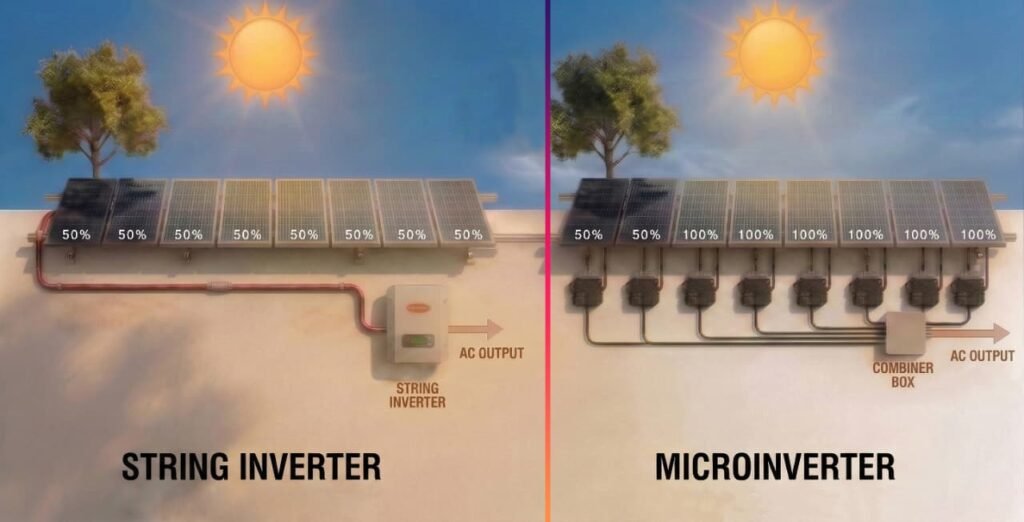
Figure 1: Impact of partial shading in string inverter and microinverter systems

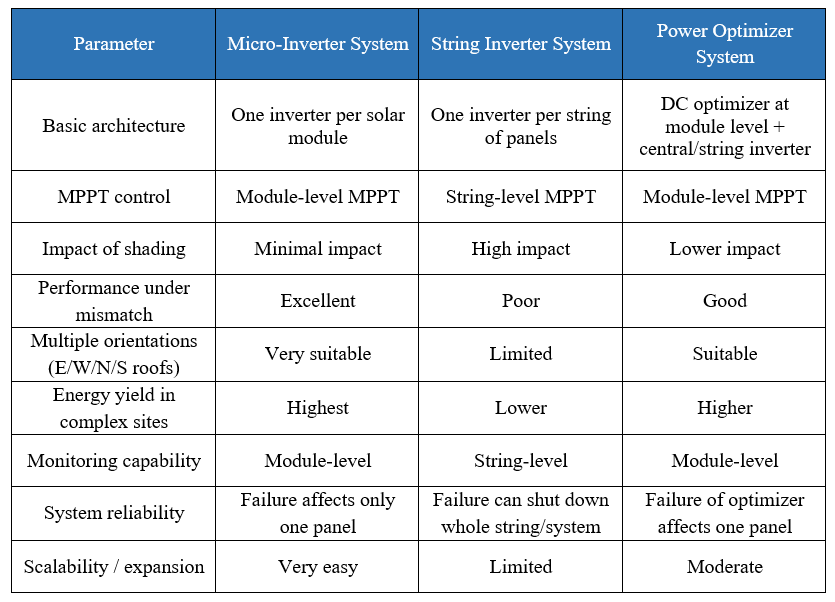
Different inverter topologies used in PV systems exhibit distinct characteristics in terms of power aggregation, electrical coupling, monitoring capability, and system architecture.

Table 1: Difference between Micro, String Inverter systems and Power Optimizer System 

Types of microinverters

Microinverters can be designed in different ways depending on the system size and electrical connection.

  • Single-panel microinverters: One inverter connected to one solar panel.
  • Multi-panel microinverters: One inverter connected to two or four panels to reduce cost.
  • Single-phase systems: Common in homes.
  • Three-phase systems: Used in larger commercial or industrial buildings

Most microinverters are grid-connected, meaning they operate only when the electricity grid is available. Some advanced models can also help support grid stability or work with battery systems.

New microinverter designs are becoming smaller, more efficient, and more reliable. Manufacturers are improving cooling and electronic components so that the devices can operate safely outdoors under solar panels for many years.

Some modern microinverters can also support multiple panels with independent control, helping reduce system cost while keeping the advantages of module-level operation.

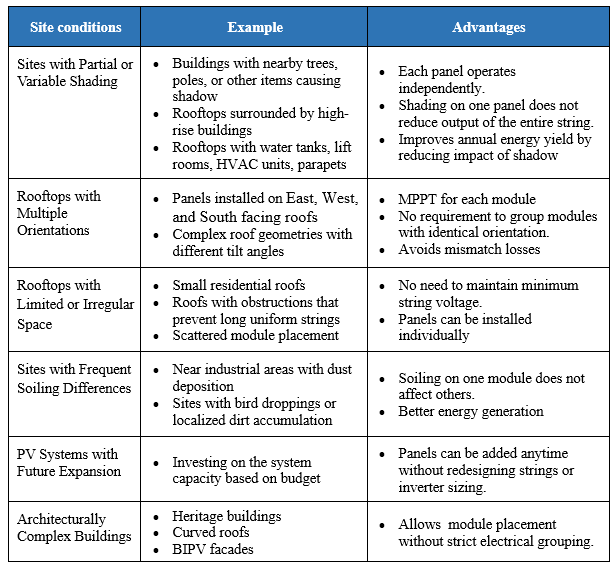
Site conditions when microinverters are most suitable

Micro-inverters are most suitable in PV installations where module-level optimization, flexibility, and shading mitigation are important. Below is a list of site situations where micro-inverters deliver the best performance compared to string or central inverters.

Table 2: Site conditions with best performance from micro-inverters

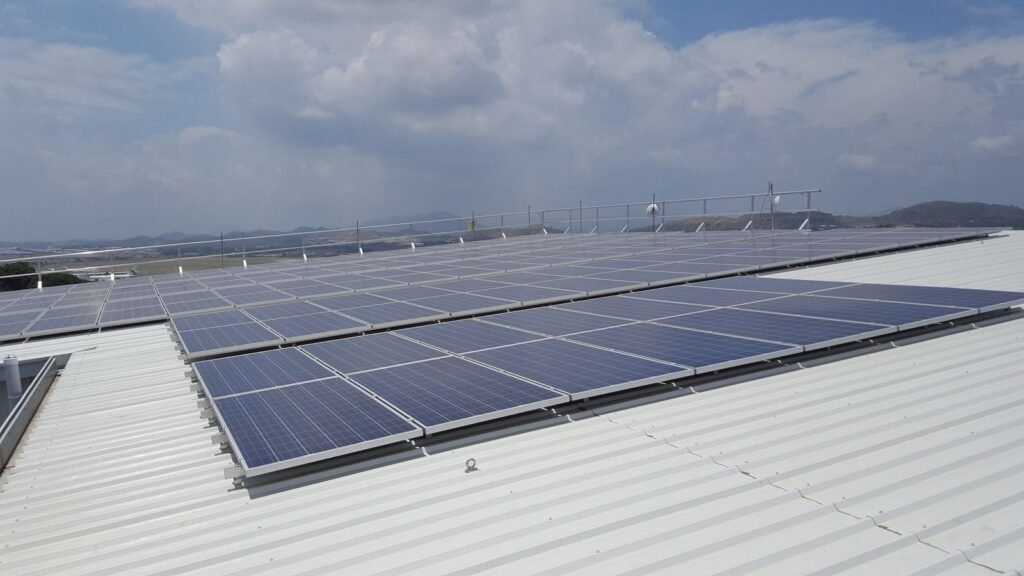
Figure 2: 100 kW rooftop PV system installed with microinverters

Conclusion

Microinverters allow each solar panel to operate independently, which can improve performance when panels are affected by shading, dirt, or different orientations. They also provide detailed monitoring and flexible system design.

Because of these advantages, microinverters are becoming increasingly popular in modern distributed solar power systems, particularly in residential and commercial rooftop installations.

Leave a Reply

Your email address will not be published. Required fields are marked *