3 Months Professional Advantage Course on Off – grid PV Systems Design and Installation
A comprehensive online course on the design and installation of off-grid photovoltaic (PV) systems. This course covers all aspects of off-grid PV system design and installation from site evaluation to cable sizing, and gives participants all the training needed to design and installation of off-grid PV systems of all sizes.
₹21,200.00
1. Course Introduction
2. Workplace Health & Safety
3. Electrical Basics and circuits
4. Solar Energy
5. Fuel Generators
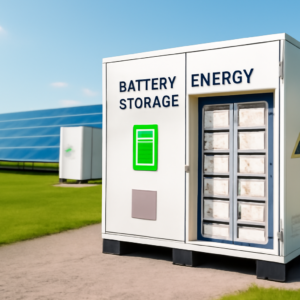
6. Energy Storage
7. Power Conversion Equipment
8. General Design Principles
9. Energy Assessment
10.Sizing System Equipment
11. Generator Sizing
12. System Wiring and Protection
13. Installation and Commissioning
14. Maintenance and Troubleshooting
15. System Modelling
16. Economics
17. Design Task
The resource materials provided under the course are highly illustrative and explanations are given with the help of case studies and worked examples.The course has 16 main topics presented so that trainees learn and practice all aspects of designing off-grid solar systems. Topics contain of illustrative reading materials, working examples for study, quizzes and exercises. Various types of quizzes and exercises are provided, including multiple choice, numerical, matching type, short answer and essay.
The first few topics of the course are designed to help readers understand the fundamentals of PV installation. These include solar irradiation, peak sun hours, sun-path diagrams, the position of the sun, solar altitude, geometric effects, tilting solar modules, electrical integration of PV modules and configuration of the array generator sizing. Types and characteristics of solar cells, including power characteristics, performance, electrical protection and reliability issues, are discussed in detail, providing essential engineering and scientific knowledge to the designers. There is also a topic on inverters, which covers inverter types, efficiencies, protection systems, power quality, monitoring and selection.
The highly illustrative topic on mounting structures covers different types of mounting systems suitable for different types of roofing and ground material, PV array row spacing and calculating wind loading for solar arrays in different regions of India.
The course covers designing, selecting and balancing system components, including DC and AC cabling, protection and disconnection switches (fuses, isolators and/or circuit breakers), lightning protection, PV array DC and inverter AC isolators, metering and system monitoring.
A step-by-step methodology is provided for undertaking a site assessment to determine energy-efficient initiatives, occupational health and safety risks, solar radiation and shading, how the PV modules will be mounted, the positioning of inverters and the cable layout.
Matching of array and inverter is of the utmost importance for better performance of a off-grid PV system. The designer needs to ensure that these components match in terms of voltage, current and power during seasonal changes in the operating temperature of the solar array. The handcourse covers this aspect with several working examples and case studies.
The course meticulously covers the forms of protection used within a PV array, the method of determining whether fault current protection is required and the sizing of fault current protection. Similarly, sizing and selection of DC and AC cabling is also explained, with several working examples.
In evaluating the energy yield and performance ratio of a PV system, it is important to consider losses from various different factors, including temperature, soiling, shading, manufacturer’s tolerance, voltage drop through AC and DC cabling, inverter, tilt and orientation of the solar modules.
At the end of the course, the participants have to complete a design assignment with given site and climatic information, equipment data sheets and economic considerations of the prevailing market.
| Sl. No. | Fee category | Fee for Indian Student (INR) | Fee for Overseas Student (USD) |
|---|---|---|---|
| 1 | Full Fee | 21,200 | 300 |
| 2 | Fee for women & unemployed youths upto 28 years of age | 12,350 | 180 |
| 3 | Fee for students and interns | 10,580 | 150 |
(i) Fee indicated above are inclusive of taxes (where applicable), resource book and access to online course and reading materials. The breakup of fee will be provided in the tax invoice.
(ii) On completion of the course, a printed copy of the certificate will be posted.
(iii) Overseas students to pay additional charge for posting of resource book and certificate.
Discount on training fee is subject to prior approval from GSES. If you are eligible for a discount, please write an email to
training@gses.in, attaching a valid identity card showing proof of study/age/gender.
Please see “Terms of Use” for detailed terms and conditions.
GSES India offers paid internship for a period of 3-12 months. Student who want to get engaged with GSES India as an intern will be selected through an assessment process. Duration and number of internship positions available depends upon the ongoing and upcoming projects and assignments at GSES India.
To enrol in this course, please visit the GSES shop. Discounts are available for full-time students; please contact us at training@gses.in for information.
This course has been developed in accordance with the Australian Clean Energy Council’s Design Off-grid Photovoltaic Power Systems Accreditation requirements and students receive a certificate of attainment on successful completion of the course. GSES also connects/recommends its student to respective industries for placement after successful completion of trainings.
GSES has a team of tutors who mark the online work and, as necessary, provide feedback or additional technical information to the students. GSES’ tutors are also available to be contacted by email during the course period.
A – 46, UG Floor, FIEE Complex, Okhla Industrial Area Phase 2
New Delhi – 110020, India
Phone: +91-11- 41040534
Mobile: +919560550077
e-mail: training@gses.in
W: gses.in
GSES India provides customised mentorship to student to support an individual’s interest on further learning to realise future career plan and growth. Mentorship programme is designed for individual student to suit a person’s educational background, functional professional and technical skill, past experience (if any) and plan for growth in employment or business. Minimum mentorship duration is one week (5 working days) and it can be extended as per requirement of the candidate.
The following topics will be broadly covered under mentorship programme:1. Guided practice on PV system design software like HelioScope, PVSyst and SketchUp for rooftop and ground mounted utility scale projects.
2. Guided practice on use of AutoCAD for preparing engineering drawings for PV plant installation covering rooftop and ground mounted utility scale projects.
3. Guided design practice for rooftop and ground mounted utility scale PV projects.
4. Guided project management practice for concept to commissioning of PV projects.
5. Guidance for setting up of solar business, development of business strategy, vendor development and supply chain management.