Infrared (IR) Thermography for Photovoltaic Systems
Introduction
Infrared (IR) thermography has become one of the most valuable tools for inspecting photovoltaic (PV) systems because it allows defects to be detected while the plant is operating, without interrupting power generation. As PV installations grow from small rooftop systems to multi-hundred-megawatt utility plants, the need for reliable, non-intrusive inspection methods has increased significantly.
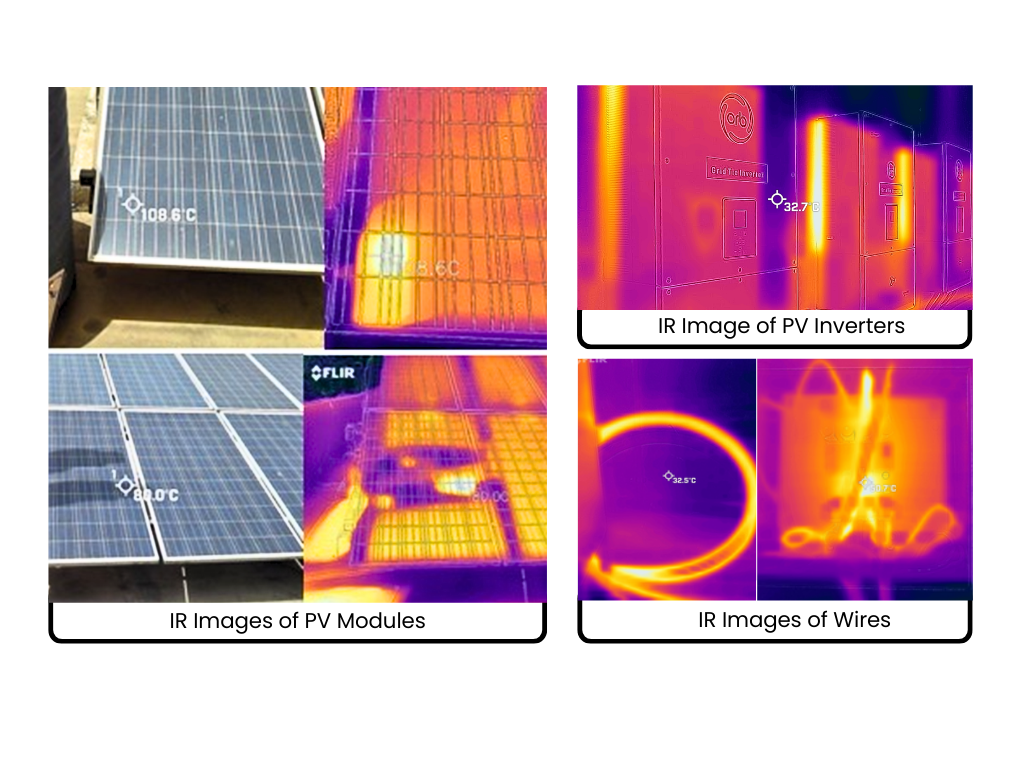
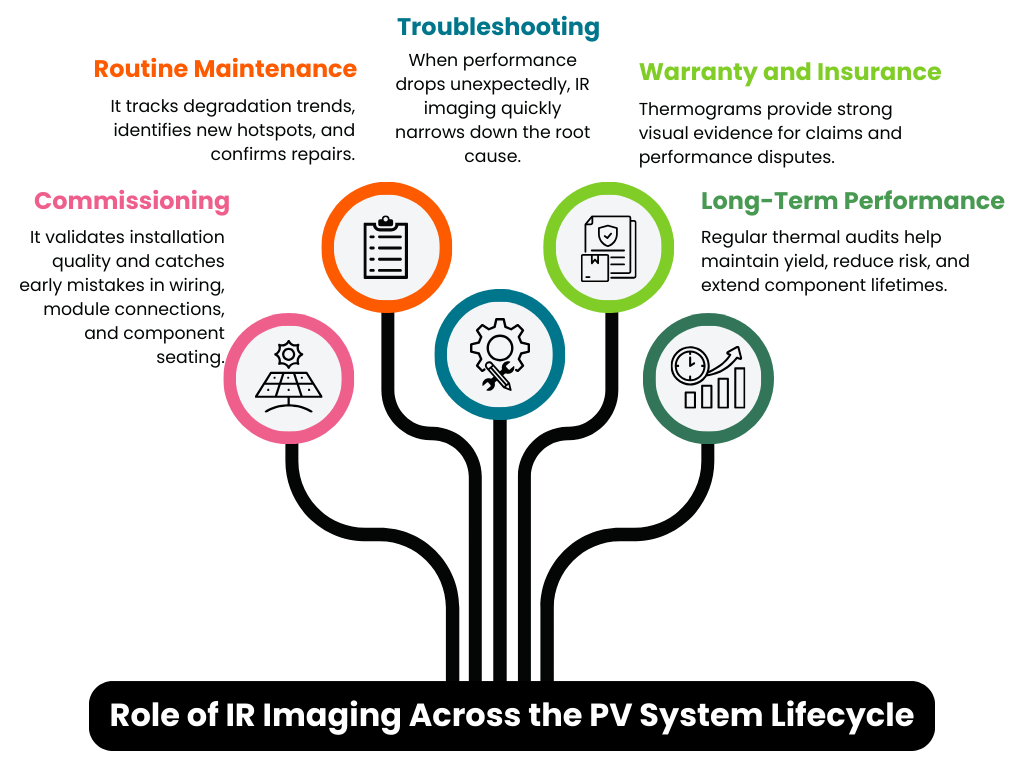
IR thermography reveals the thermal behaviour of PV modules and balance-of-system (BOS) components while the system is energized. Many PV defects first evident as localized heating long before power loss or physical damage becomes apparent. Therefore, IR inspections are widely used during commissioning, routine operation and maintenance (O&M), performance troubleshooting, and safety audits.
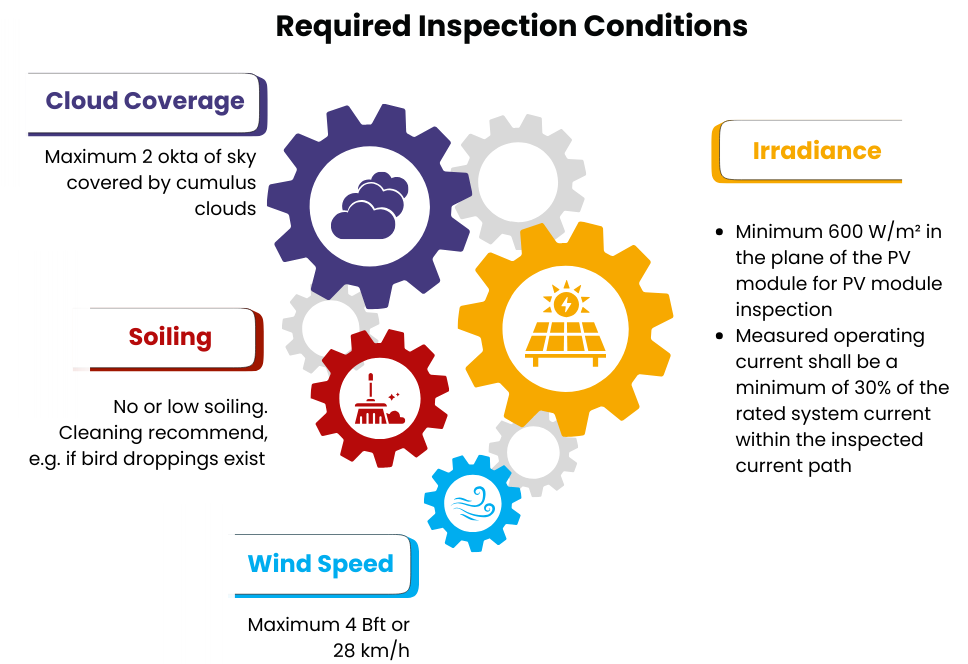
The technical standard “IEC TS 62446-Part 3: 2017 Outdoor infrared thermography” defines requirements for outdoor infrared thermographic inspections of photovoltaic (PV) modules and plants in operation. It covers equipment, environmental conditions, procedures, and reporting to identify thermal abnormalities, supporting preventive maintenance and performance optimization.
Principles of Infrared Thermography
In PV systems, temperature distribution is directly related to electrical performance. When current flows through cells and electrical components, small resistive losses generate heat. Under healthy operating conditions, temperature remains uniform across modules and components. However, defects disturb current flow and create localized heating. Typical causes of abnormal heating include:
- Cell microcracks or manufacturing defects
- Damaged solder bonds or interconnects
- Contact resistance in connectors or cables
- Shading or soiling of modules
- Bypass diode malfunction
- Loose electrical connections
Inspection Levels
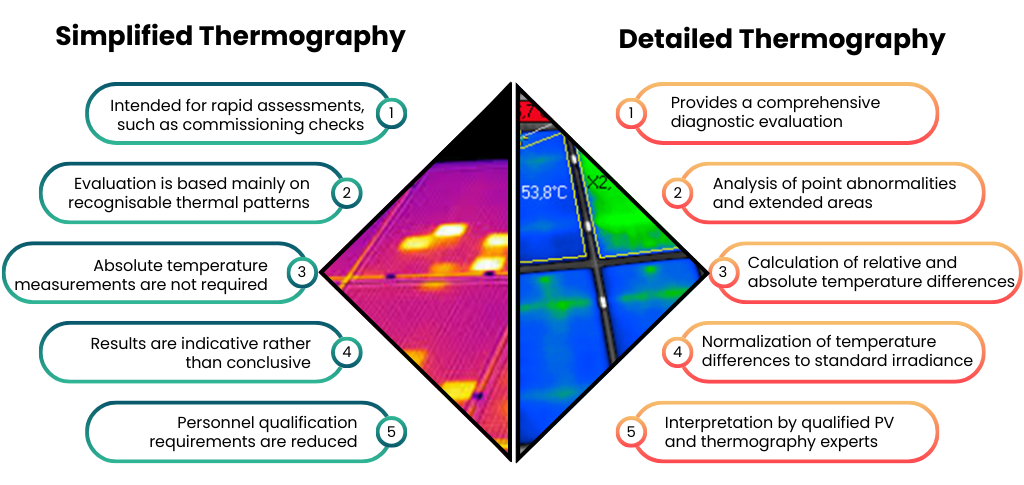
- Simplified Thermography
- Detailed Thermography
Detailed thermography is used perform quantitative temperature analysis. Measurements are taken at specific points and across areas, and comparisons are made between normal and abnormal regions. This is required for performance troubleshooting and long-term asset management. This approach helps:
- Quantify fault severity
- Identify root causes
- Plan corrective actions
- Monitor degradation trends
Ground-Based vs Aerial IR Thermography
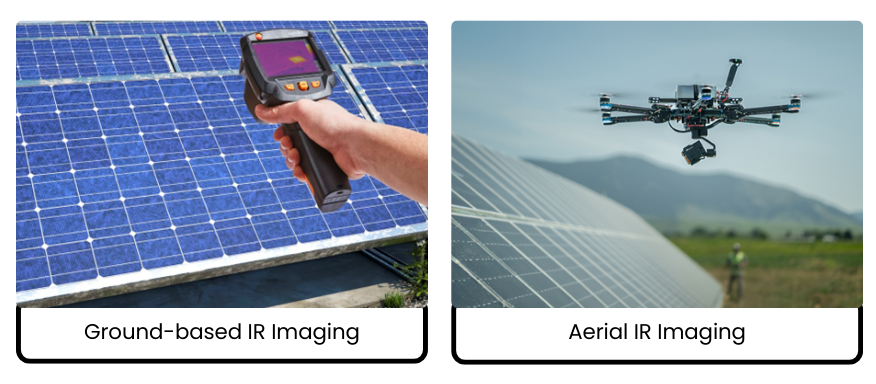
IR inspections can be performed from the ground using handheld cameras or from the air with drones. Each method has unique strengths that suit different scenarios.
Ground-Based IR Imaging
Operators use handheld cameras while walking along module rows. This approach offers:
- High-resolution close-up analysis
- Inspection of connectors, junction boxes, and combiner panels
- Immediate visual confirmation of issues
- Coverage of large areas in short time
- Access to difficult terrain
- Automated mapping and anomaly detection
- Repeatable inspections over time
Thermal Patterns – What They Reveal
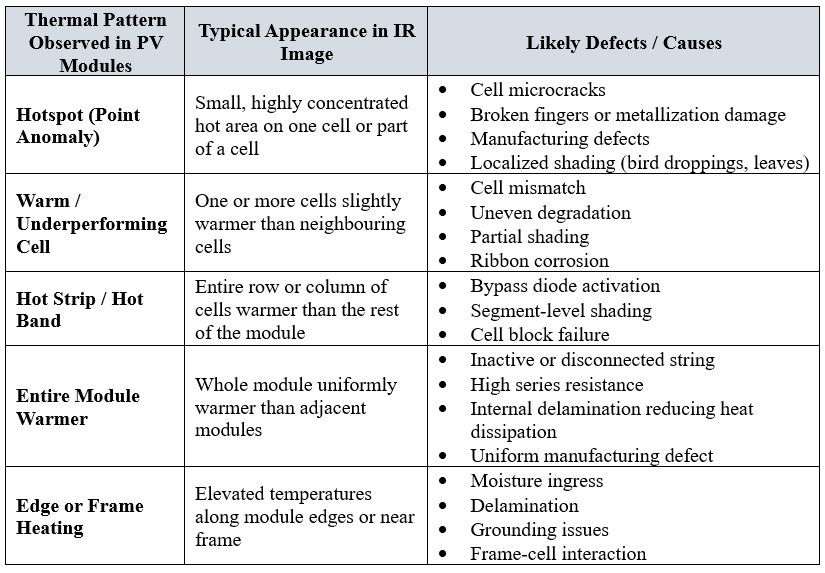
The thermal patterns observed on PV modules indicate underlying electrical, material, or environmental issues. The table below summarizes common module-level thermal anomalies, their typical appearance, likely causes, and technical interpretation.
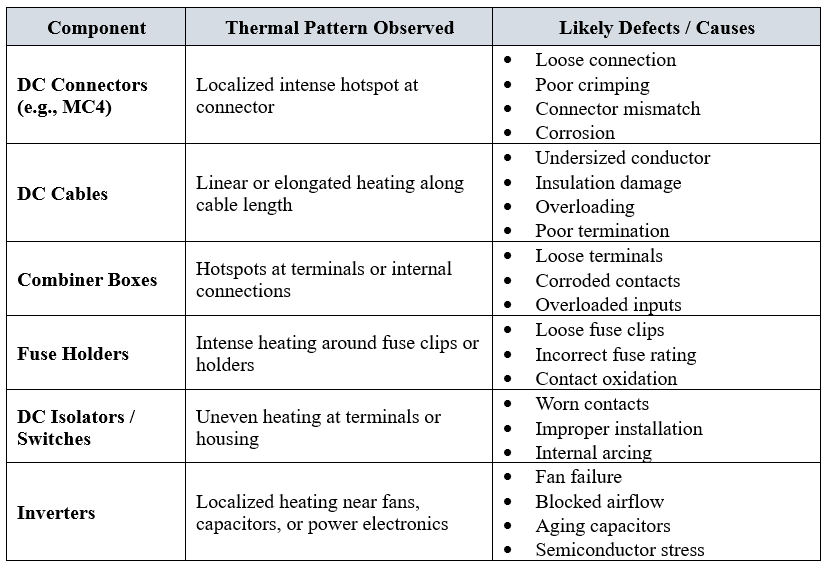
IR thermography also reveals abnormal heating in balance-of-system (BOS) components, often associated with increased resistance, installation issues, or component degradation. The table below outlines common BOS thermal patterns and their technical interpretation.
Conclusion
Infrared thermography is one of the most powerful non-contact diagnostic tools available for PV systems. It enables early detection of electrical and structural problems, improves safety, and helps maintain plant performance without disrupting operations. When applied correctly and interpreted by qualified professionals, IR imaging becomes an indispensable tool throughout the entire lifecycle of modern photovoltaic systems.
Inspection reliability strongly depends on inspector competence. International standards recommend trained and certified thermographers, especially for detailed inspections. Personnel should be trained to understand both PV system operation and thermographic interpretation.
Excellent information, very informative