Importance of Capacity Building in the Global Energy Transition
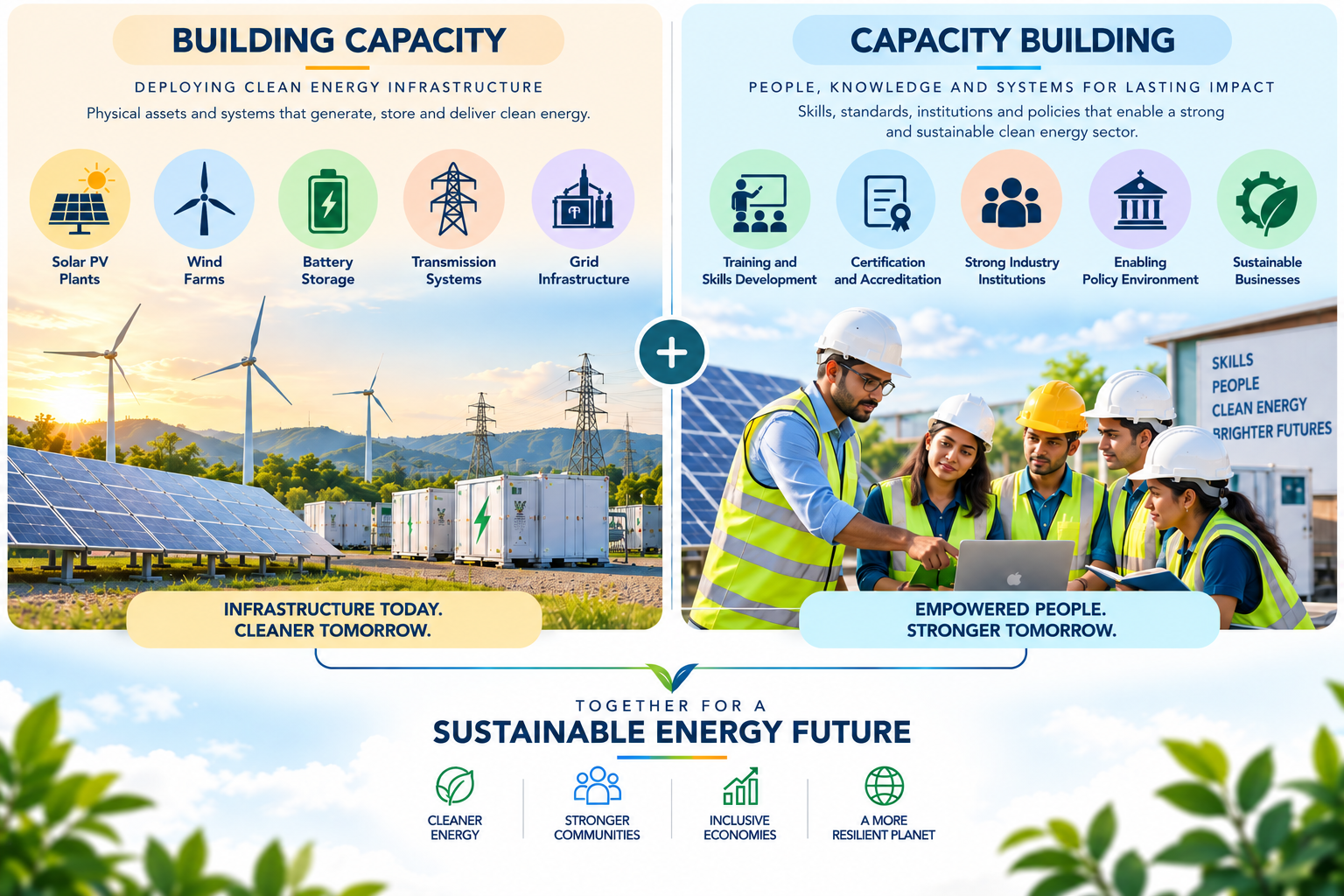
The global energy transition is often viewed primarily as a process of building energy capacity installing solar PV, wind farms, battery storage, transmission systems and other clean-energy infrastructure. However, there is an important distinction between building capacity and capacity building. Building capacity refers essentially to deploying energy producing systems and associated infrastructure, whereas capacity building encompasses the much broader activities required before, during and after deployment to ensure that energy systems deliver sustainable social and economic benefits.
This distinction is particularly important for developing countries and remote communities, where renewable energy can provide improved energy security and resilience while reducing exposure to the increasing cost risks associated with conventional energy resources. Renewable energy projects, however, cannot deliver these benefits in isolation. Their long-term success depends on an ecosystem of appropriate standards, guidelines, training, certification, industry institutions, government policy and sustainable businesses. These elements are interconnected and weakness in any one, potentially reducing the sustainability of the project and the industry as a whole.
Standards and guidelines: the foundation of quality
As new and renewable energy technologies develop rapidly, standards and regulations can struggle to keep pace with innovation. Poor system design and installation have historically been significant causes of renewable energy system failures. Minimum installation standards, design guidelines and industry best-practice guidelines are therefore essential for maintaining quality and protecting consumer and industry confidence.
Quality training and skills development
A successful energy transition requires a skilled workforce capable of designing, installing, operating and maintaining renewable energy and smart systems. Yet the rapid expansion of the energy industry has not always been matched by the development of accredited training programmes for engineers and technicians.
Quality training should therefore be integrated into national or regional training and qualifications frameworks. Industry stakeholders need to identify the competencies required, work with competent training institutions, develop appropriate courses and ensure that trainers themselves are adequately prepared. Importantly, capacity building should avoid simply producing large numbers of trained people without considering skill set required by the industry.
Certification and continuous professional development
Training alone does not guarantee quality. Certification or accreditation schemes can provide a mechanism for demonstrating competence and ensuring compliance with established standards. Effective schemes can combine training, certification, periodic renewal, inspections, codes of conduct and continuing professional development. Such mechanisms help maintain technical quality and protect the reputation of the growing new and renewable energy industry.
Strong industry institutions
An effective renewable energy industry also requires strong and representative industry associations. Such associations can bring together companies and other stakeholders, develop common positions, support industry development and communicate effectively with governments. Their effectiveness depends on active participation, knowledgeable leadership and a commitment to the development of the industry as a whole rather than individual businesses alone.
Sustainable and ethical businesses
The final link in the capacity-building chain is a commercially sustainable business sector. Successful businesses need to be customer-oriented and operate through sound and ethical management systems. Businesses that focus on sustainability can contribute to the development of sustainable projects and, in turn, a sustainable new and renewable energy industry.
Capacity building as an integrated approach
The key message is that capacity building is not simply train the people. It is an integrated process connecting the policy makers, managers, engineers, technicians, businesses, industry associations and government. The following image illustrates this through eight interconnected components: product standards, installation standards/guidelines, design guidelines, quality training programmes, technician certification, effective industry associations, government policy, and sound and ethical businesses.
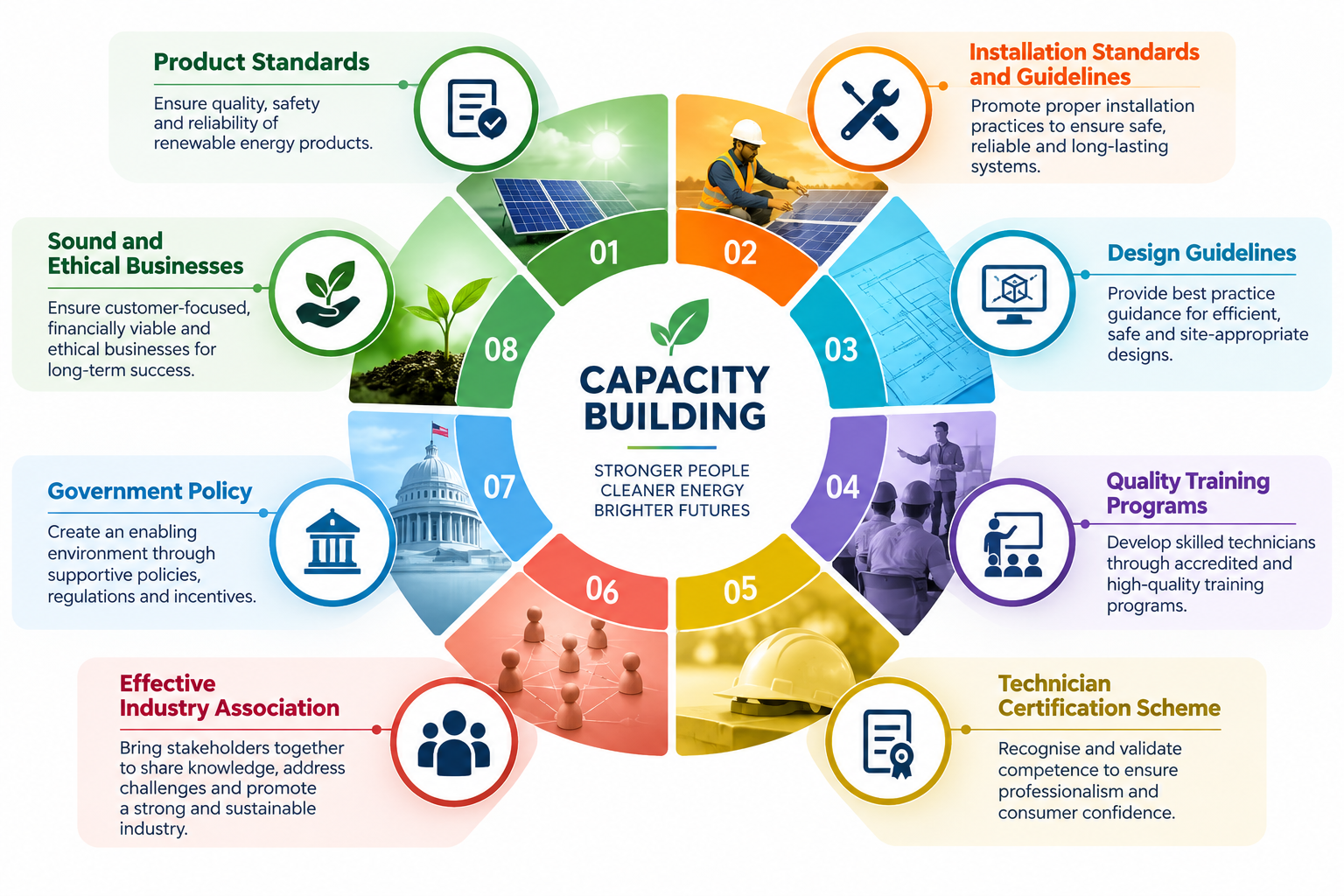
These components need to develop together. Government policy without competent technicians may not produce quality projects; training without certification may not assure competence; standards without effective enforcement may not deliver quality; and projects without sustainable businesses may struggle to create a lasting industry. Capacity building therefore requires coordination, long-term thinking and strong leadership, with all participants sharing a common vision for the development of the new and renewable energy sector.
Conclusion
The global energy transition is ultimately not only a transition in energy technologies, but also a transition in knowledge, skills, institutions and industry capability. Building renewable-energy infrastructure is essential, but building the capacity to develop, regulate, operate, maintain and continuously improve that infrastructure is equally important.
For this reason, capacity building should be regarded as a core investment in the energy transition rather than a supporting activity. Countries that combine investment in clean energy infrastructure with quality standards, training, certification, strong institutions, appropriate government policy and sustainable businesses will be better positioned to achieve reliable, resilient and lasting energy transformation.
The world does not only need more new and renewable energy capacity; it needs the capacity to make the energy transition succeed.